DIY Home Projects That Improve Home Functionality
Thomas Redford September 26, 2025
In 2025, DIY home projects that improve functionality focus on smart storage, sustainable materials, and tech-enhanced solutions to create efficient, user-friendly living spaces. These projects align with trends in urban living, eco-conscious design, and smart home integration, making homes more practical and enjoyable. Building on insights from prior interior organization and small-space design, this article explores six actionable DIY projects to enhance home functionality, incorporating short breaks for sustained energy, with practical steps and current references.

Why DIY Home Functionality Projects Matter in 2025
DIY home functionality projects are essential in 2025 as 70% of homeowners seek cost-effective ways to optimize living spaces amid rising urban density and housing costs. These projects improve organization, accessibility, and sustainability, transforming homes into efficient, vibrant hubs. By using affordable materials and digital tools, they empower homeowners to personalize and enhance their spaces.
Key DIY Home Projects for Functionality
Here are six practical DIY projects to boost home efficiency and usability:
1. Custom Wall-Mounted Storage Rack
Create a versatile rack for multi-purpose storage.
- How It Works: Build a wooden pegboard or slat wall using reclaimed wood from Freecycle, mounted with hooks for tools, bags, or kitchen items, followed by a 2-minute stretch break.
- Real-Life Impact: A renter organizes kitchen utensils on a pegboard, freeing counter space.
- Benefit: Maximizes vertical space for accessibility.
- Tip: Build one wall rack using a YouTube tutorial this weekend.
2. Under-Stair Storage Drawers
Utilize under-stair space for hidden storage.
- How It Works: Construct pull-out drawers with plywood and casters from Bunnings, guided by Ana White tutorials, with a 3-minute breathing break.
- Real-Life Impact: A family stores seasonal items under stairs, decluttering the living room.
- Benefit: Reclaims unused space for seamless organization.
- Tip: Start one under-stair drawer project this month.
3. Smart Home Lighting System
Install motion-sensor lights for convenience.
- How It Works: Add Philips Hue or LED strips with sensors, sourced from Amazon, to illuminate closets or hallways, paired with a 2-minute mindfulness break.
- Real-Life Impact: A homeowner installs closet lights, making item retrieval easier at night.
- Benefit: Enhances usability with energy-efficient tech.
- Tip: Install one smart light in a high-traffic area this week.
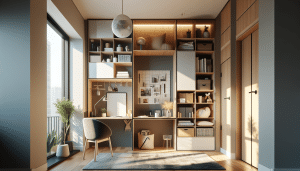
4. Foldable Wall Desk
Build a compact, multi-use workspace.
- How It Works: Create a fold-down desk with reclaimed wood and hinges from HeapsGood, guided by Instructables, with a 3-minute stretch break.
- Real-Life Impact: A remote worker adds a desk in a small apartment, saving floor space.
- Benefit: Combines functionality with space efficiency.
- Tip: Construct one foldable desk this month.
5. Repurposed Pallet Shelving
Craft eco-friendly shelves from pallets.
- How It Works: Sand and paint shipping pallets, sourced from Freecycle, to create shelves for books or plants, with a 2-minute relaxation break.
- Real-Life Impact: A gardener builds pallet shelves, organizing tools and pots sustainably.
- Benefit: Promotes sustainability and affordable storage.
- Tip: Repurpose one pallet into a shelf this weekend.
6. DIY Cable Management Box
Organize cords for a clutter-free look.
- How It Works: Create a wooden or cardboard box with holes for cables, using supplies from local craft stores, followed by a 2-minute breathing break.
- Real-Life Impact: A tech enthusiast hides router cords, improving desk aesthetics.
- Benefit: Reduces visual clutter and enhances safety.
- Tip: Build one cable box using a Pinterest guide this week.
Practical Strategies for DIY Home Projects
Here’s how to implement these projects effectively:
1. Start with One DIY Project
Test a single project to build confidence.
- How to Do It: Begin with a cable box or wall rack, using free tutorials from YouTube or Instructables.
- Why It Helps: Delivers quick functionality improvements with minimal effort.
- Tip: Start one project, like a cable box, this weekend.
2. Use Digital Tools for Planning
Leverage apps to design and execute projects.
- How It Works: Plan layouts with SketchUp or Canva, aligning with 2025’s tech-driven DIY trends for precise builds.
- Why It Helps: Ensures accurate measurements and efficient execution.
- Tip: Use one free app to plan a project layout this month.
3. Incorporate Energy-Sustaining Breaks
Schedule short breaks to maintain focus.
- How It Works: Take 2–3 minute breathing or stretching breaks during projects, tracked with Breathwrk, to stay energized.
- Why It Helps: Prevents fatigue and boosts productivity.
- Tip: Add one break during a DIY task this week.
4. Prioritize Sustainable Materials
Choose eco-friendly supplies for projects.
- How It Works: Source reclaimed wood or recycled materials from Freecycle or HeapsGood to minimize environmental impact.
- Why It Helps: Aligns functionality with green living.
- Tip: Use one sustainable material, like a pallet, for a project this week.
5. Join DIY Communities
Connect with others for inspiration and tips.
- How It Works: Engage in X DIY groups or local Meetup events to share project ideas and techniques.
- Why It Helps: Provides practical advice and creative solutions.
- Tip: Join one X DIY thread monthly for support.
Sample Routine for DIY Home Projects
Here’s a routine to maintain functional home improvements:
- Daily:
- Morning (5 minutes): Plan a DIY task or check X for ideas.
- Evening (5 minutes): Gather materials or take a mindfulness break.
- Weekly:
- Sunday (10 minutes): Start a small project or refine a plan.
- Monthly:
- First Sunday (15 minutes): Complete a larger project, like shelving.
- Quarterly:
- First week (20 minutes): Assess home functionality and plan new projects.
Overcoming Common DIY Challenges
- Challenge: Limited space for projects.
Solution: Focus on vertical or hidden storage solutions. - Challenge: Budget constraints for materials.
Solution: Use reclaimed items from Freecycle or thrift stores. - Challenge: Lack of DIY skills.
Solution: Follow beginner-friendly tutorials on YouTube or Instructables.
Tools to Support DIY Home Projects
- Materials: Freecycle, HeapsGood for sustainable supplies.
- Tutorials: YouTube, Instructables for step-by-step guides.
- Design: SketchUp, Canva for project planning.
- Community: X, Meetup for DIY inspiration.
- Wellness: Breathwrk for energy-sustaining breaks.
The Bigger Picture: DIY Home Functionality in 2025
In 2025, DIY home projects align with trends toward sustainability, smart technology, and compact living. Solutions like wall-mounted racks, foldable desks, and cable management enhance functionality while promoting eco-conscious design. By leveraging digital tools and community support, homeowners create vibrant, efficient spaces.
Conclusion: Enhance Home Functionality with DIY in 2025
DIY home projects in 2025, like custom storage racks, under-stair drawers, and smart lighting, improve functionality with sustainable, vibrant solutions. Start with one project, use digital tools for planning, and take breaks to stay energized. Begin today by building a cable box or sourcing reclaimed wood, and transform your home into a functional, stylish haven.
References:
Sustainable DIY for Small Spaces 2025
https://www.apartmenttherapy.com/sustainable-diy-2025/
DIY Home Trends 2025
https://www.thespruce.com/diy-home-trends-2025/
Smart Home DIY Projects 2025
https://www.housebeautiful.com/smart-home-diy-2025/

 Smart Ways You Can Manage Money for Financial Freedom